


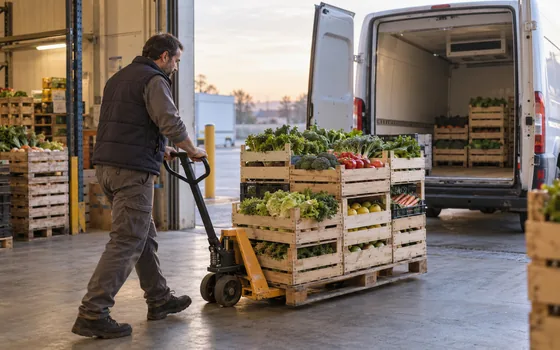

How much you have, where it is,
and what's about to run out.
The inventory updates itself: goods come in from the packing slips you photograph, go out from the POS closes. All that's left for you is to confirm, not count.
The inventory count is already old by the time you finish it.
You count on Sunday evening, copy it onto a sheet, and by Monday morning it's wrong again. Meanwhile nobody really knows how much oil there is in the kitchen.
- You count once a month
For 29 days out of 30 the number is an estimate.
- Packing slips end up in a binder
The goods have arrived, but the inventory doesn't know.
- Nobody writes down the waste
What gets thrown away vanishes from the accounts and reappears in the food cost.
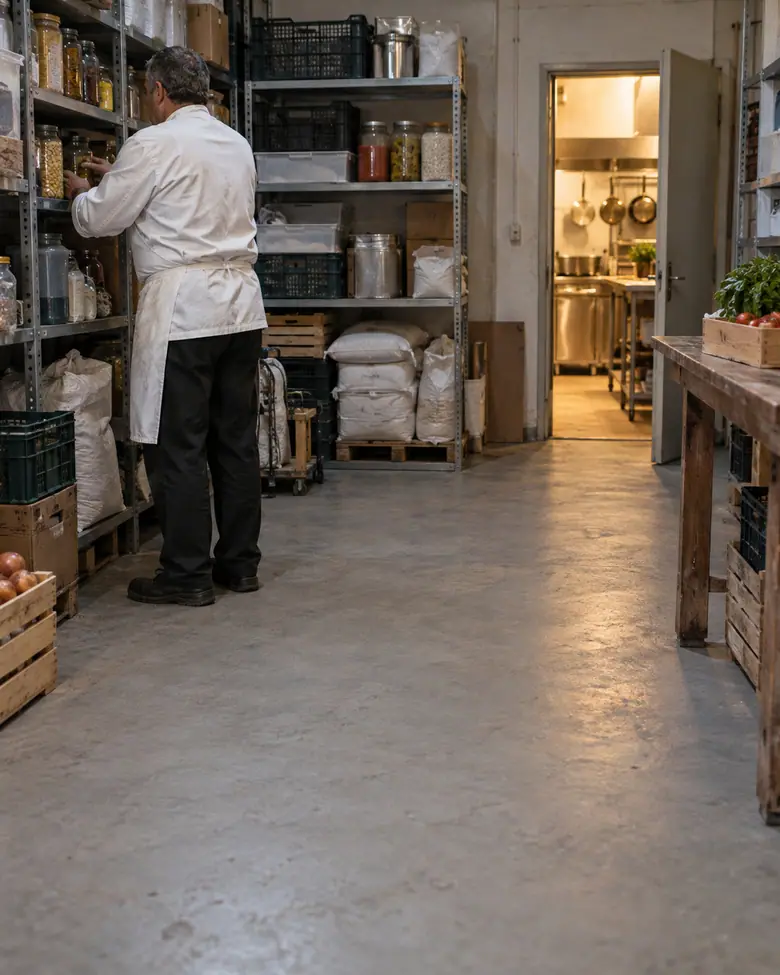
Goods come in from the packing slip.
You photograph the packing slip at the counter. Ordinoo reads the lines, links them to the products and puts them on hold for your confirmation.
The lines that add up it confirms on its own. The others it puts in front of you.
Quantity, price and product are compared with the order. What matches is already received and just waits for a tap; what doesn't add up stays highlighted with the reason.
- Already received by Ordinoo
All that's left is to confirm it, even the whole packing slip at once.
- To check by hand
Price off the agreement, line read with doubt, quantity different from the order.
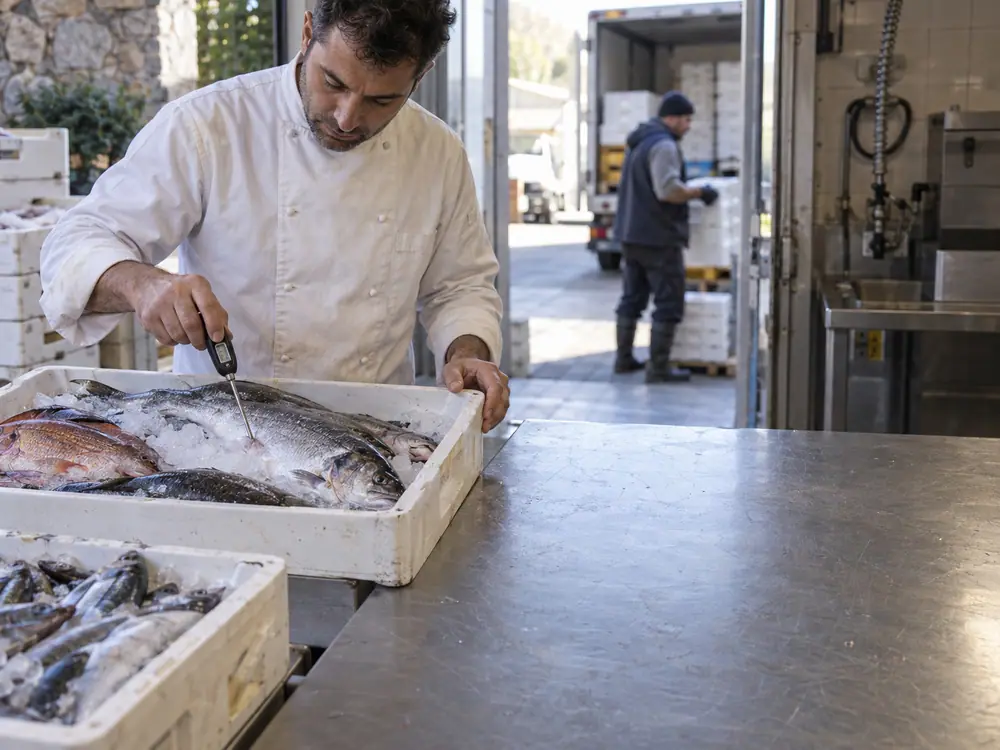
It goes out when you sell, not when you notice.
At the POS close every dish sold becomes consumption, through the recipes. The items it doesn't know it asks you about only once, then they stay linked.
- From the recipes, to the ounce
One margherita takes out peeled tomatoes, fresh mozzarella and flour in the quantities you set.
- You log waste in two taps
Spoilage and breakages go into the accounts, instead of vanishing.
It's not one inventory: it's three.
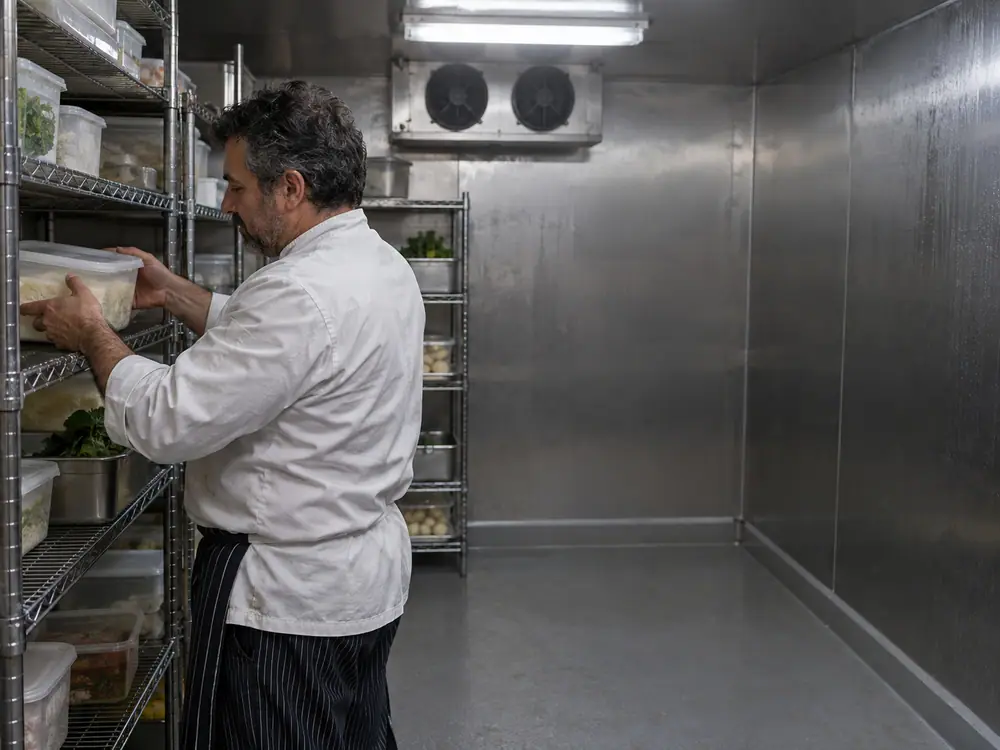
Kitchen, bar and walk-in have different stock and different consumption. Every line knows where it is, so the on-hand is the one for the right place.
It warns you while there's still time.
Every product has a par level and an average consumption. When the on-hand drops, you don't get an alarm: you get a draft order already filled in, which goes into the shopping list.
- How many days you cover
The par level speaks in days of coverage, not just quantity.
- The reorder is already written
Grouped by vendor, with the minimum order respected.
No more notes on the cooler.
Whoever is in the kitchen or at the bar requests what's missing from their phone. You see who asked for what and when, accept, and the item enters the shopping list without going through a message.
- You know who asked
Name, department and time stay attached to the request.
- It ends up where it should
Once accepted it becomes a shopping-list line, not a reminder to keep in mind.
Every number says where it comes from.
You don't have to take it on trust: open the on-hand and see every movement with its source, the time and who confirmed it. If a number doesn't convince you, in two taps you know why.
- Receiving from document
With the packing slip number and the vendor.
- Depletion from the POS
With the POS close and the recipe that produced it.
- Manual adjustment
With the name of who made it and the reason.
Bring us a real packing slip,
and watch the inventory move
We photograph it together, you watch it become a receiving, and we watch the on-hand change with yesterday's POS close. Free and no strings attached: if it's not for you, we'll tell you ourselves.
- We photograph one of your real packing slips
- You watch it become a receiving
- We look together at what's about to run out