




The cost of every dish, at yesterday's prices.
Every dish with its food cost, calculated from the recipes and the prices on the latest invoices. When an ingredient goes up, the dish knows the next morning, and you know which dish is eating your margin.
You find out the food cost at the end of the month.
It gets calculated once, at the prices from when the recipe was written. Then pancetta goes up, oil goes up, and the carbonara that earned well earns less without anyone noticing. You see it in the accounts, three months later.
- At January's prices
The recipe costs what it cost when you wrote it.
- One number for the whole menu
You know you're at 31%, you don't know which dish gets you there.
- Redone by hand
An Excel sheet nobody updates, because it costs an afternoon.
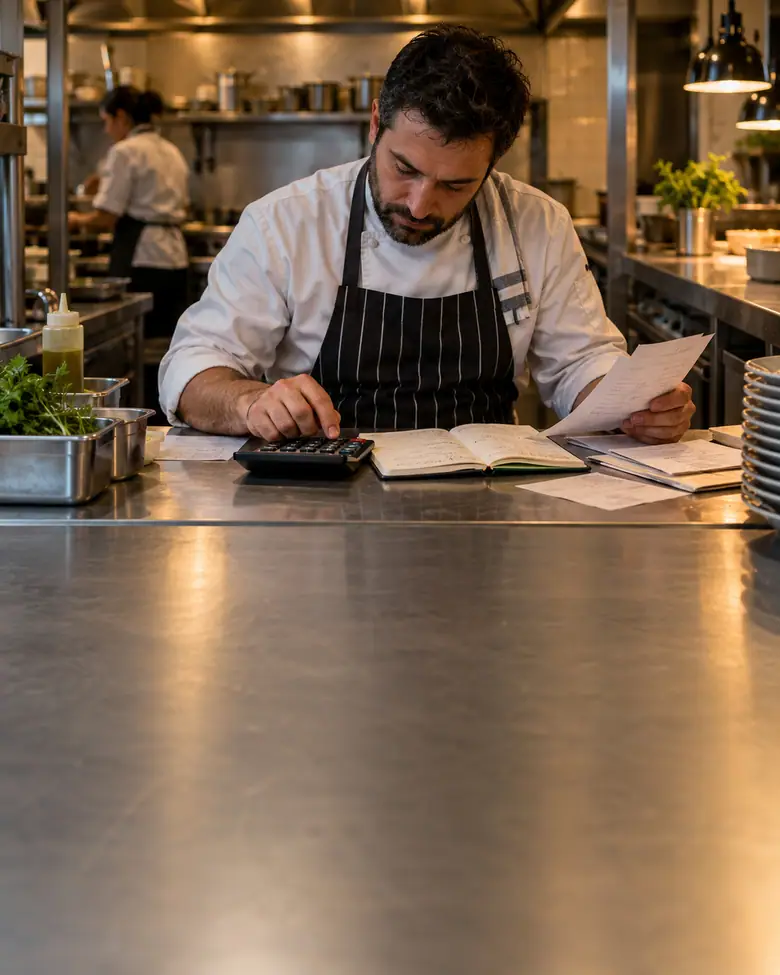
What you should be using, and what you use.
Theoretical food cost comes from the recipes multiplied by sales. Actual food cost comes from inventory: what came in minus what's left. The difference between the two is where generous portions, waste and whatever goes missing end up.
Two numbers, one gap, one department.
If theoretical and actual match, the recipes are being followed. If they drift apart, the problem isn't the price: it's the portion, the waste or the control. And you see it by department, not in the total.
- Theoretical from recipes
Portion weights times sales, at the prices on the latest invoices.
- Actual from inventory
Goods received minus stock on hand: no estimates, just movements.
The cost of the dish moves with the invoices.
Every invoice read updates the ingredient's price, and every updated ingredient recalculates the dishes that use it. There's no recalculation day: this morning's food cost uses last night's prices.
- The price increase on the dish
Pancetta goes up 17%, the carbonara costs $0.17 more.
- Every night
The Agent does the recalculation, with the day's invoices.
You know which dish carries the restaurant.
Food cost is only half the story: how many times you sell a dish matters too. Margin per portion multiplied by sales tells you who pays the rent, who should be pushed and who should be rethought. Ordinoo sorts it for you.
- Margin per portion × sales
The tiramisù at 21% is worth more than a main at 30%.
- Who should be rethought
Price, portion or off the menu: the choice stays yours.
- Written by the Agent
Every night, with yesterday's sales.
Bring us a recipe and an invoice,
we'll calculate the real food cost
One of your dishes, with your recipe and your prices: we see what it costs today, what it cost in January, and which ingredient moved it. Free and no strings attached: if it's not for you, we'll tell you ourselves.
- One of your real recipes
- The prices from your invoices
- The dish's food cost, today